Beginner's Guide to SSI Open Water Certification: Everything You Need to Know Before Learning to Dive
Have you ever dreamed of breathing underwater, swimming alongside sea turtles, or exploring vibrant coral reefs? The SSI Open Water Diver course is your first step into the incredible world of scuba diving. Whether you're planning a tropical holiday or looking for a new lifelong hobby, becoming a certified diver opens the door to adventures all over the world.
What Is the SSI Open Water Diver Certification?
The SSI Open Water Diver certification is the world's most widely recognized entry-level scuba certification. It teaches beginners the knowledge, skills, and confidence needed to dive safely with a buddy.
Once certified, you'll be able to dive at thousands of dive destinations around the world without needing an instructor to accompany you, as long as you dive within the limits of your training and experience.
SSI certifications are internationally recognized, making them your passport to exploring the underwater world wherever your travels take you.
Who Can Learn to Dive?
Almost anyone can become a scuba diver.
The course is designed specifically for beginners, so you don't need any previous diving experience.
You may be a good candidate if you:
- Love the ocean
- Enjoy adventure
- Feel comfortable in the water
- Are in generally good health
- Want to explore marine life
- Are looking for a new hobby
People of all ages complete their Open Water certification every year, making scuba diving one of the world's most accessible adventure sports.
Do I Need to Be a Strong Swimmer?
You don't need to be a competitive swimmer.
However, you should be comfortable in the water and able to complete the basic swimming and floating requirements set by SSI.
Your instructor will explain these requirements before the course begins and help you feel confident throughout your training.
What Will You Learn?
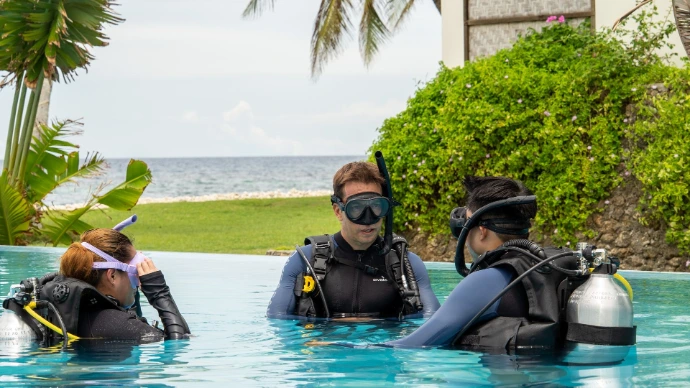
The SSI Open Water course combines classroom learning, confined water practice, and open water dives.
By the end of the course, you'll know how to:
- Assemble scuba equipment
- Perform safety checks
- Breathe comfortably underwater
- Control your buoyancy
- Communicate using hand signals
- Clear water from your mask
- Recover your regulator
- Ascend and descend safely
- Plan dives with a buddy
- Handle common underwater situations
- Protect the marine environment
These skills form the foundation for all future diving adventures.
How Does the Course Work?
Step 1: Digital Learning
You'll begin with SSI's interactive online learning materials.
Study at your own pace before or during your holiday by learning about:
- Diving physics
- Diving physiology
- Equipment
- Safety procedures
- Marine conservation
- Dive planning
This flexible approach allows you to spend more time enjoying the water during your trip.
Step 2: Confined Water Training
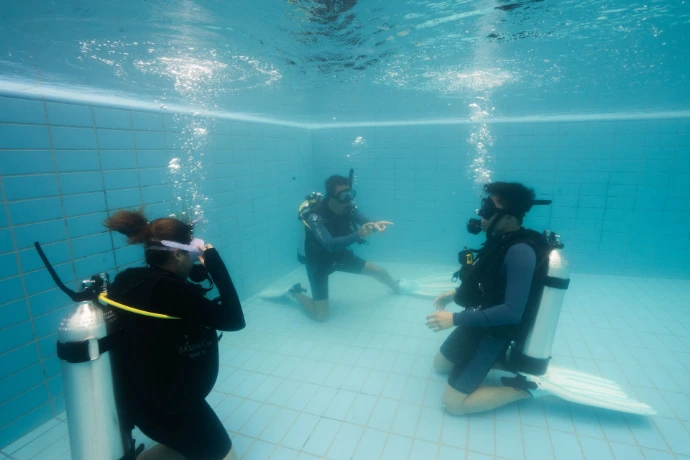
Before heading into the ocean, you'll practice essential skills in calm, shallow water.
You'll learn:
- Equipment setup
- Buoyancy control
- Mask clearing
- Regulator recovery
- Underwater communication
- Emergency procedures
Your instructor will guide you step by step until you feel comfortable.
Step 3: Open Water Dives
After mastering the basics, you'll complete a series of training dives in the ocean.
These dives allow you to apply your new skills while exploring real coral reefs and marine life.
Many students see sea turtles, colorful reef fish, and healthy coral during their certification dives—an unforgettable introduction to the underwater world.
How Long Does the Course Take?
Most students complete the SSI Open Water Diver course in three to four days.
The schedule includes:
- Online theory
- Skill practice
- Open water dives
- Final assessments
Your instructor will adjust the pace if needed to ensure you're comfortable and confident before certification.
What Equipment Will I Use?
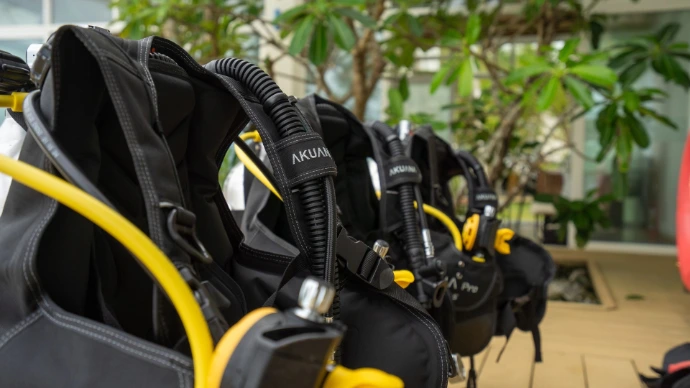
During your course, you'll learn to use professional scuba equipment, including:
- Mask
- Snorkel
- Fins
- Buoyancy Control Device (BCD)
- Regulator
- Dive computer
- Cylinder (tank)
- Weights
- Wetsuit
At Blue Dream Dive, all training equipment is regularly inspected and maintained to ensure safety and comfort.
Is Scuba Diving Safe?
Scuba diving is a safe recreational activity when proper training and procedures are followed.
The Open Water course focuses heavily on safety, teaching you how to:
- Dive within your limits
- Monitor your air supply
- Maintain neutral buoyancy
- Communicate with your buddy
- Respond calmly to unexpected situations
- Respect environmental conditions
Your instructor is with you throughout your training, ensuring you develop safe habits from the very beginning.
Why Learn in Siquijor?
Siquijor is one of the Philippines' hidden gems for scuba diving.
Its beginner-friendly conditions include:
- Warm tropical water
- Excellent visibility
- Calm dive sites
- Healthy coral reefs
- Colorful marine life
- Relaxed atmosphere
- Fewer crowds than many famous dive destinations
These conditions help new divers feel comfortable while enjoying spectacular underwater scenery.
What Marine Life Might You See?
One of the most exciting parts of learning to dive is discovering marine life in its natural habitat.
Depending on the season and dive site, you may encounter:
- Green sea turtles
- Hawksbill turtles
- Clownfish
- Lionfish
- Moray eels
- Nudibranchs
- Octopus
- Cuttlefish
- Blue-spotted stingrays
- Schools of tropical reef fish
- Colorful hard and soft corals
Every dive is unique, making each underwater adventure memorable.
Common Concerns from First-Time Divers
"I'm afraid I'll panic underwater."
This is one of the most common worries—and it's perfectly normal.
Your instructor introduces each skill gradually, allowing you to build confidence in shallow water before progressing.
Most students are surprised by how calm and peaceful scuba diving feels once they become comfortable breathing underwater.
"Will my ears hurt?"
You'll learn how to equalize pressure gently during descent.
When done correctly, equalizing quickly becomes second nature and helps keep dives comfortable.
"What if I make mistakes?"
Everyone makes mistakes while learning.
That's exactly why you're training with a professional instructor. You'll practice each skill until you're confident before moving on.
Learning is meant to be enjoyable—not rushed.
What Happens After Certification?
Your Open Water certification is just the beginning.
Once certified, you'll be able to:
- Join fun dives around the world
- Explore coral reefs
- Dive on tropical holidays
- Continue improving your skills
- Enroll in advanced scuba courses
- Learn underwater photography
- Discover wreck diving
- Experience night diving
- Meet divers from around the world
Many divers describe earning their certification as the start of a lifelong passion.
Why Choose Blue Dream Dive?
At Blue Dream Dive in Siquijor, we believe learning to dive should be safe, enjoyable, and unforgettable.
Our experienced SSI professionals provide patient, personalized instruction in small groups, helping every student progress at their own pace.
When you train with us, you'll enjoy:
- Certified SSI instructors
- Small group sizes
- High-quality equipment
- Beautiful beginner-friendly dive sites
- Warm tropical waters
- Relaxed learning environment
- A strong focus on safety and marine conservation
Whether you're taking your very first breath underwater or pursuing your first scuba certification, we're here to guide you every step of the way.
Frequently Asked Questions
How deep can I dive after certification?
The SSI Open Water Diver certification qualifies you to dive to a maximum recreational depth of 18 meters (60 feet) with a certified buddy.
Is the certification valid worldwide?
Yes. SSI certifications are internationally recognized and accepted by dive centers across the globe.
How old do I need to be?
SSI offers junior programs for younger divers, while the standard Open Water course is available from the minimum qualifying age established by SSI and local standards.
What if I wear glasses?
Many divers use contact lenses, and prescription masks are also available through many dive centers.
Can I fly after diving?
Yes, but you should wait the recommended surface interval before flying. Your instructor will explain the current safety guidelines during your course.
Begin Your Underwater Journey
There are few experiences as unforgettable as taking your first breath underwater. One moment you're standing on the boat, and the next you're floating effortlessly through a vibrant underwater world filled with colorful fish, coral reefs, and perhaps even a sea turtle gliding past.
The SSI Open Water Diver course is more than a certification—it's the beginning of a lifetime of adventure, exploration, and respect for the ocean.
At Blue Dream Dive in Siquijor, we're passionate about helping new divers discover the magic of the underwater world in a safe, supportive, and fun environment. Whether you're visiting the island for a few days or planning a longer stay, we'd be delighted to help you earn your scuba certification and create memories that will last a lifetime.
We look forward to welcoming you beneath the surface.
Diving equipment
At Blue Dream Dive, all training equipment is regularly inspected and maintained to ensure safety and comfort.
Swimming-pool training
At Blue Dream Dive in Siquijor, we're passionate about helping new divers discover the magic of the underwater world in a safe, supportive, and fun environment.
Why Choose Blue Dream Dive?
Our experienced SSI professionals provide patient, personalized instruction in small groups, helping every student progress at their own pace.